Although postcard collecting and trading was so popular in the Edwardian era that some
newspapers called it a “mania,” interest in the hobby (and the business) plummeted after the First World War (1914–1918).
There were several reasons for this. The increase in the number of telephones in society definitely had an impact on the
postcard use. After all, why send messages through the mail when you could pick up the phone? (Ironically, we’re now using
phones to send text messages.) But the imposition of the war tax stamp in 1915 appears to have been the coup de grâce. In
a nutshell, in 1915 the Canadian government doubled the domestic postcard rate from one to two cents to help pay for the
war. This doesn’t sound like much but in a 1915 issue of Bookseller and Stationer, an early trade journal now available
online, several Ontario retailers wrote in to complain that the war tax stamp cut their postcard sales by as much as 75%!
Although postcards continue to be published right up to the present day, postcard collecting (a.k.a. deltiology) didn’t
regain popularity in Canada until the 1970s. An exposition of antique postcards at Royal Albert Hall in London, England
earlier that decade is said to have sparked the hobby’s resurgence in Britain, and the rest of us followed suit. The Toronto
Postcard Club, founded in 1977, was the first of many Canadian postcards clubs set up by and for collectors. For the record,
there are four other clubs in Ontario that I know of, one in Quebec and one in British Columbia. (Check the Toronto Postcard
Club’s website for details.)
So with postcard collecting back on track over the past several decades, what are people collecting? In other words, are
there types of cards out there that should be collected? The short answer is you should collect whatever you like. Unlike
coins, stamps and other antiques, there are no annual catalogues in Canada that track what’s hot and what’s not in the postcard
trade. Astute dealers are aware of trends of course, but for the most part collectors pick a preferred subject, location
or postcard type and take it from there. For example, I started collecting patriotic postcards in the 1980s because I liked
their “Hurrah for Canada!” themes. The South African War (1899–1902) patriotic cards are popular with many collectors because
they’re mostly from the pre-Edwardian era (i.e., early for private postcards) and scarce if used/mailed in the period they
were issued (see Figure 1).
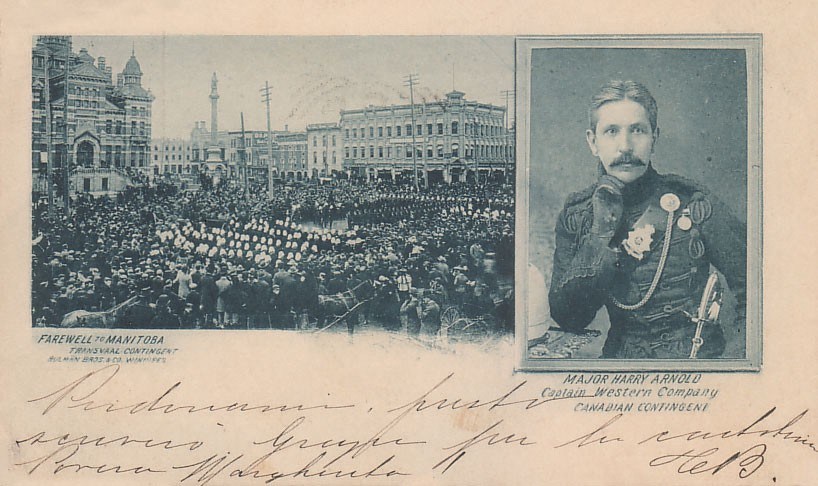
Figure 1. This Bulman Bros. & Co. (Winnipeg) postcard shows Major Harry Arnold and the Canadian Contingent on parade prior
to their trip to South Africa in 1900. Used in period, this is an $80 to $100 card at any dealer’s table.
There’s no way I can discuss patriotic postcards without illustrating at least one by Montreal’s J. C. Wilson & Co. Credited
with producing Canada’s first patriotic series, Wilson produced early flag postcards commemorating Queen Victoria’s Diamond
Jubilee (1897), continued with Spanish-American War commemoratives (1898), and then issued an iconic South African War series.
All but a couple of these cards are relatively easy to find in unused condition, and most can be bought for $20 to $50.
However, because philatelists love the postal history on these cards when used in period, used copies are always in demand.
Consequently, it’s not unusual to see these cards priced at $100+ each, depending on the design, postmark and condition
of course. And I’ve seen prices as high as $500 on the rarest card in the series (see Figure 2).
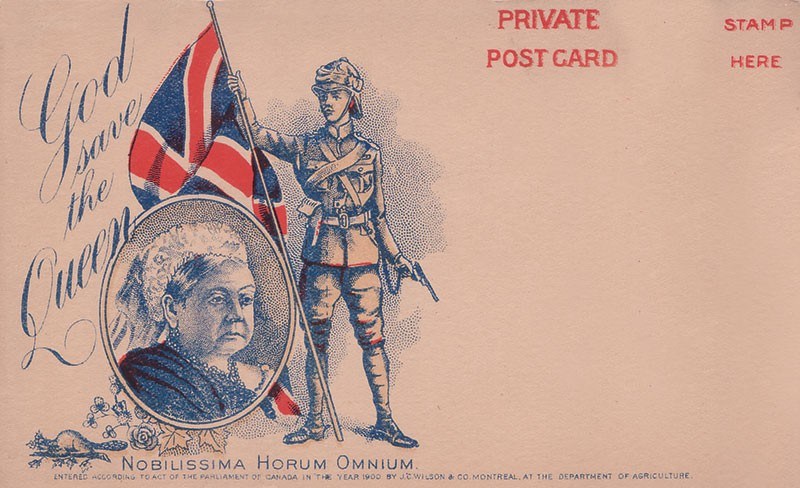
Figure 2. There are only three known copies of this J. C. Wilson & Co. (Montreal) South African War postcard used in period.
This unused copy would be reasonably priced at $50. A used in period copy could fetch 10 times that much.
Another type of postcard very popular with collectors these days is the real photo card. Real photo cards were made by developing
photographic film directly onto specially marked photo paper. Unlike printed postcards, which were made in their millions
via various printing techniques, real photo cards were made by developing photographic film directly onto specially labelled
photo paper. As such, real photo cards tend to be much scarcer than their printed cousins. Factor in the nostalgia component
of seeing the “ol’ hometown” and various other old-time subjects or events in an actual photograph, and real photo postcards
can command some very high prices. For example, the real photo card of St. Joseph, Ontario’s Masse Family, with all 21 children
present (Figure 3), could easily fetch $75 to $100 at a postcard show.
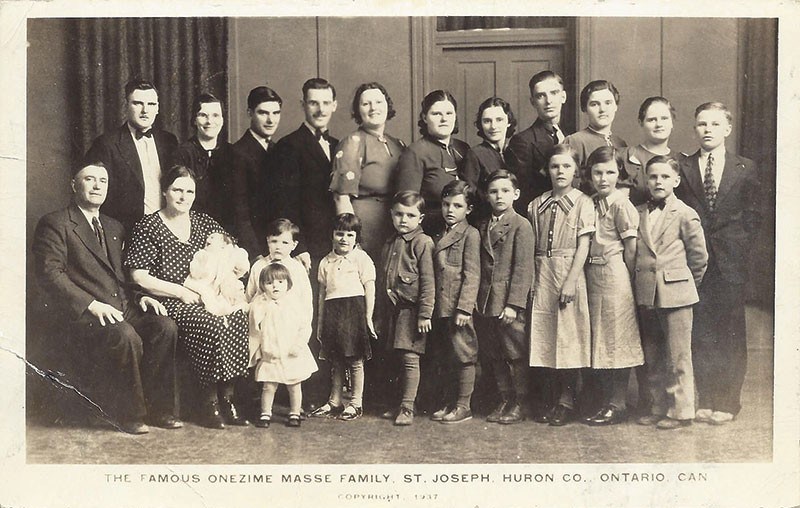
Figure 3. The huge Masse Family of St. Joseph, Ontario is shown in this terrific 1937 real photo card.
Although I’ve shown some of the more expensive antique postcards in this article, the vast majority of collectible cards
can be purchased for about $5 to $10 each. And thanks to enterprising publishers like Brantford’s Stedman Bros., local view
cards of just about every city, town, village and hamlet in the country were ordered from Germany, shipped back Canada and
then distributed nationwide. (I’ll discuss the actual process in more detail in a future article.) Incidentally, the current
tally of Stedman Bros. output prior to the First World War is 5,715 different postcards. This makes this particular publisher
one of Canada’s golden age (1900–1914) giants (see Figures 4 & 5).
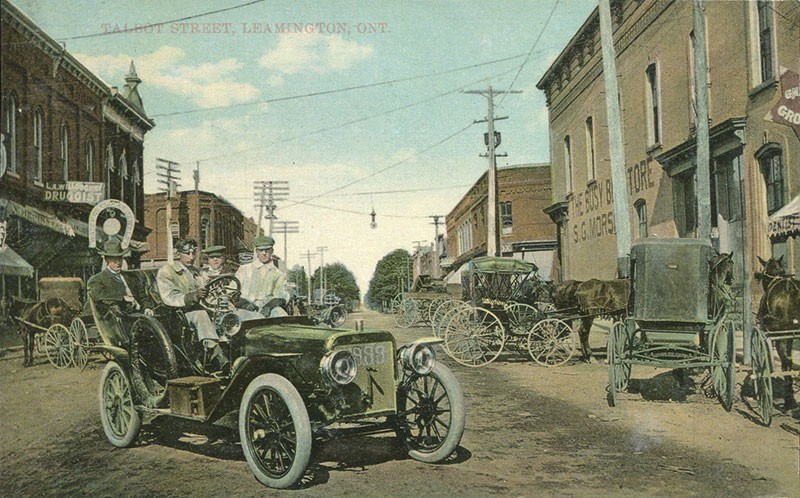
Figure 4. Stedman Bros. published this postcard of downtown Leamington, Ontario around 1907. Many view cards like this one
can be purchased for $5 to $10.
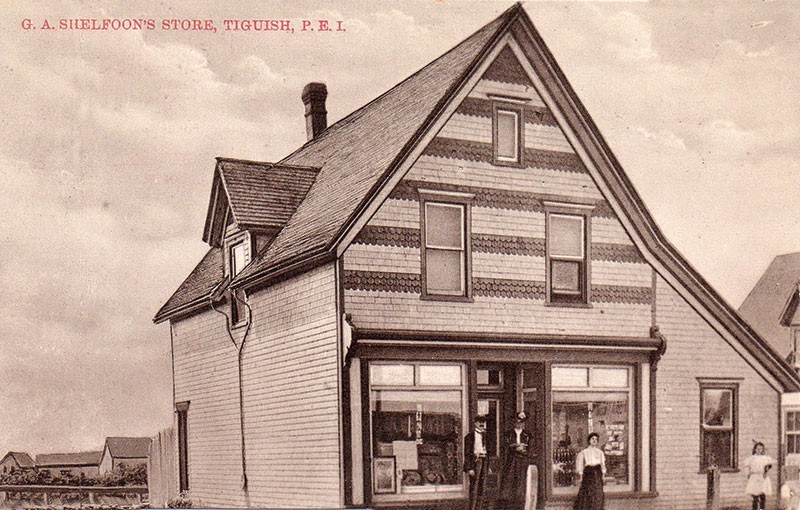
Figure 5. This Stedman Bros. beauty shows George Shelfoon’s (my great uncle!) store in Tignish, P.E.I. Note Tignish is misspelled
“Tiguish” in the caption.