Teacups have been passed down from generation to generation since the discovery of the humble tea leaf and its pleasurable infusion in China circa 2737 BCE.
The early teacups of China were merely miniature bowls or drinking cups without handles or saucers. These were added much later after the tea leaf was introduced to Europe in the 16th and 17th centuries via Portuguese and Dutch trading ships.
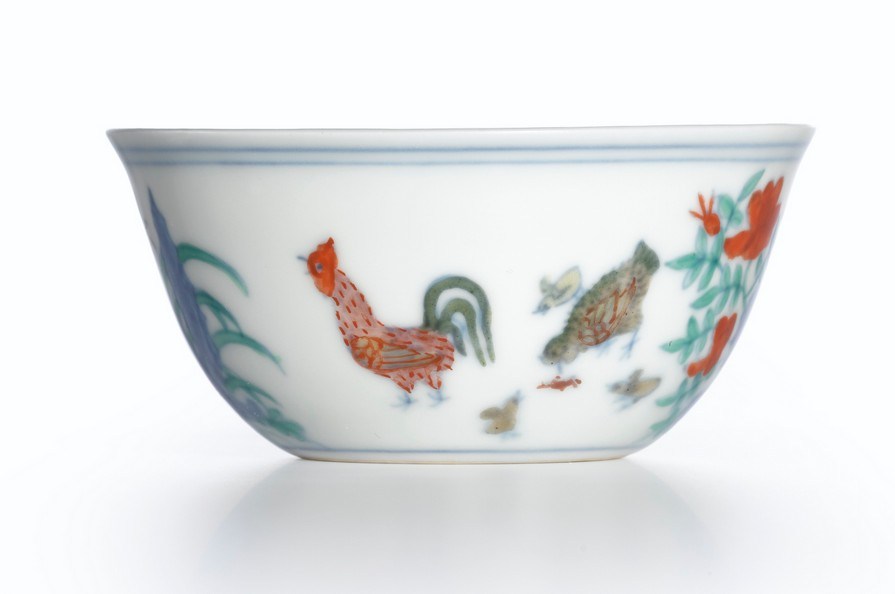 500 year old chicken cup from China's Ming Dynasty sold at Sotheby's, Hong Kong for a record $36 million in 2014
17th Century Portugal Introduces Tea to the British Monarchy
As the story goes, in 1662 the Portuguese Princess Catherine of Braganza (1638 – 1705) travelled to England to marry King Charles II. Upon disembarking from the ship, she was in dire need of refreshment. The Brits were all too happy to offer her a glass of weak ale, but were unprepared for her request for a “dish of tea.”
There were no supplies of tea in the royal pantry, as this leafy plant had yet to endear itself to the British public as a refreshing beverage. You were more likely to encounter tea leaves in the medicine cabinet as a herbal remedy for "headaches, colds, ophthalmia, catarrh, asthma, sluggishness of the stomach, and intestinal troubles" (All About Tea, Volume I by William H. Ukers).
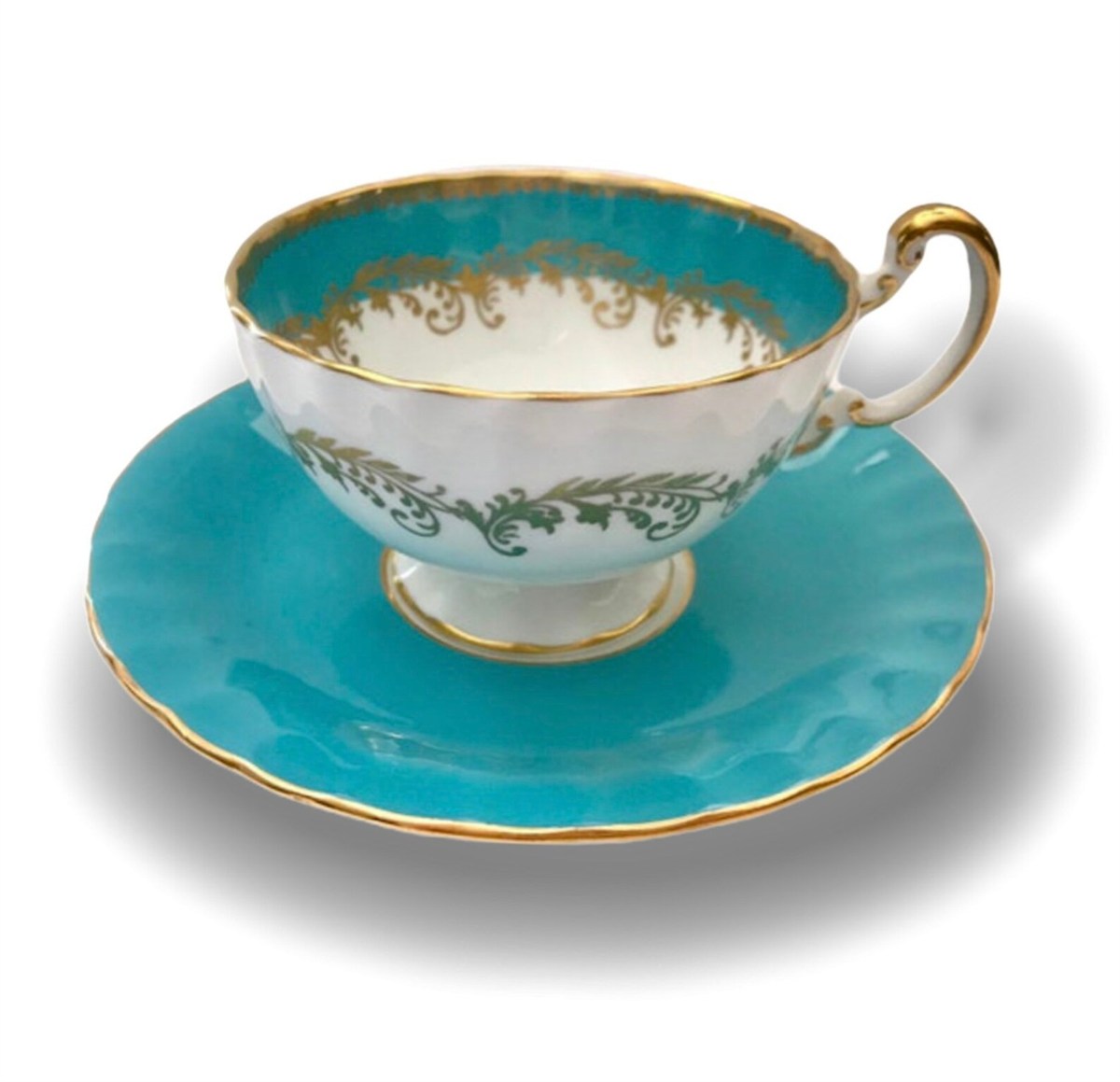 Aynsley Oban shape China Tea Cup and Saucer listed on Etsy for $73.80
So after a little counselling from Princess Catherine’s entourage, the British Royal staff were supplied the tea leaves and hastened to make a lively brew for their new queen. This was the beginning of a time-honoured tradition that would go on to become a definitive British custom.
The Inextricable Union of High Society England and High Tea
London high society sat up and took notice of Princess Catherine’s arrival and her yearning for tea. The habits of the monarchy had long been regarded as something to be admired and emulated. To be seen sipping tea was as gentrified as you could get. Everyone who could afford it at 60 shillings per pound (roughly £300 in today’s currency) stocked their shelves with this precious commodity. This sudden obsession for tea led to a massive opportunity in trade and the demand for delicate porcelain tea cups skyrocketed.
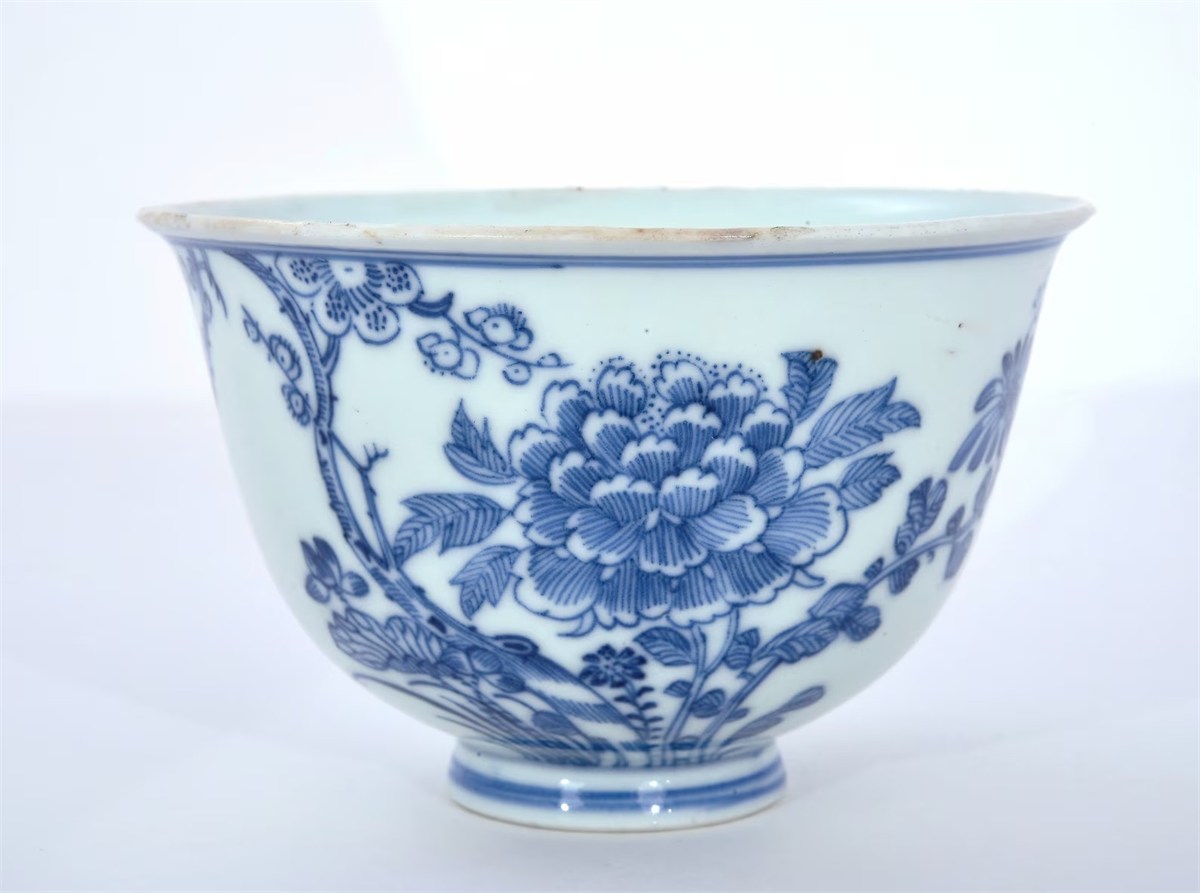 17th Century Chinese Blue & White Porcelain Tea Cup with Peony Flower listed on Etsy for $855.65
At first blue and white porcelain tea bowls were imported from China at great expense. China had perfected the art of porcelain-making from 1600-1050 BCE and continued to develop better techniques through 25-220 CE. By the time the Tang dynasty was in power from 618-907, porcelain had reached its zenith and remained steadfast until the Ming dynasty from 1368-1644.
The Making of European and English Potters and Porcelain Factories
As the art of tea-brewing and tea-drinking took hold of the British Isles, Western potters and ceramic-makers were determined to invent their own superior brand of porcelain. Tea in China was best enjoyed at warm temperatures, whereas British gentry preferred their tea piping hot. Ceramicists wanted to create a material that not only withstood high temperatures but also possessed a fine, almost translucent quality.
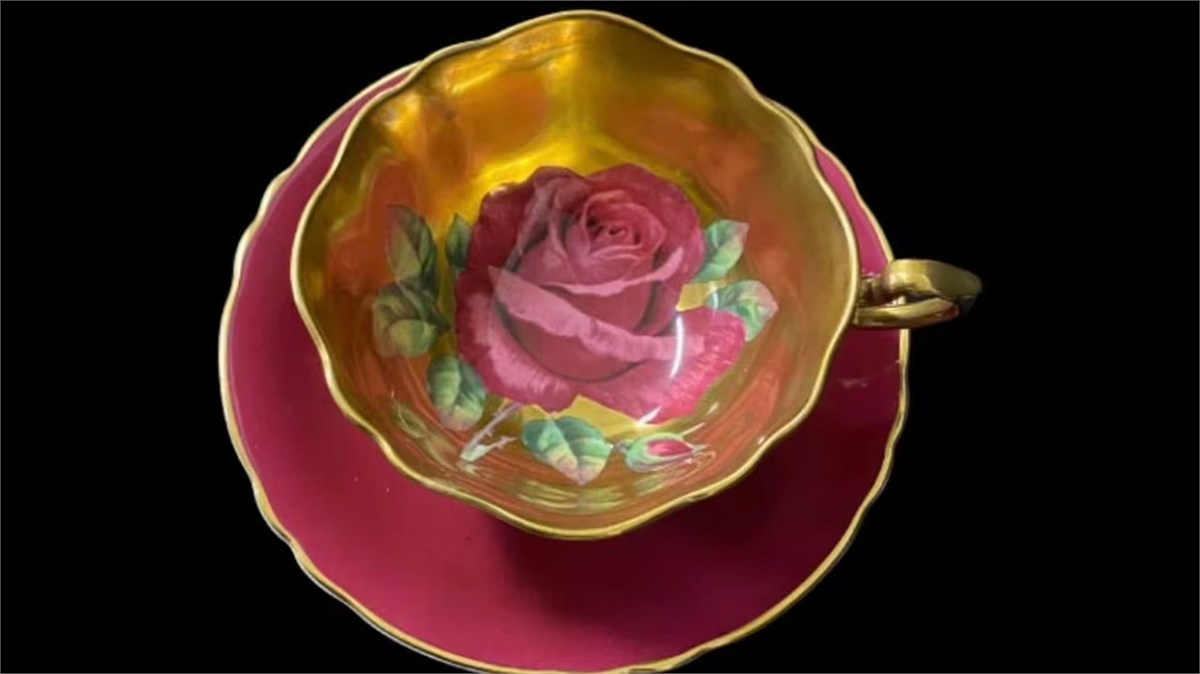 Paragon bone china tea cup (circa 1900) sold at Key Auctions in Moncton, New Brunswick in 2021 for $2,400. Paragon China was later bought by Royal Doulton and discontinued in the 1990s.
European potters experimented with various materials, such as clay and powdered glass, and created a durable yet fine quality porcelain ideal for tea cups and tea services. This was known as soft-paste porcelain.
Competing European potters continued to perfect their own brands of porcelain and cash in on an ever-growing industry. By 1710 the royal German Meissen porcelain factory pioneered a new version of hard-paste porcelain. This became known as Dresden porcelain and was highly regarded throughout the world by artists, artisans and connoisseurs.
 Dresden porcelain bears the signature logo of the crossed swords and is said to be one of the first-ever trademarks in existence.
Josiah Spode (1773‒1797) Reputed Bone China Pioneer
Meanwhile, England had been working on their own national brand of porcelain, with Josiah Spode leading the way in the creation of bone china. Replacing feldspar, quartz and alabaster with the addition of bone ash to kaolin and petunse, bone china resulted in an elegantly thin, strong and translucent porcelain that was the envy of tea-drinkers everywhere. With a brilliant white quality like that seen in the early versions of Chinese porcelain, bone china became the symbol of luxury and good taste.
Watch how Spode’s Blue Italian is made
Spode’s Blue Italian is one of the most important designs in British ceramic history and celebrated its 200th anniversary in 2016. Twenty two pairs of hands make Blue Italian at Portmeirion Group’s factory in Stoke-on-Trent.
Nothing was more fashionable at the time than enjoying afternoon tea with the ladies. Tea rooms began to appear all around England and featured delicate sandwiches, pastries and cups of tea served in beautifully decorated bone china.
The Architectural Addition of the Tea Cup Handle
European and English ladies preferred their tea served hot and enjoyed the addition of milk and sugar to spice up their beverage. Tea sets were then popular with teapots, sugar bowls and creamers completing the afternoon ritual. With this came the addition of a handle to tea cup designs, first proposed by the British architect Robert Adam (1728‒1792), as a way to prevent the ladies from burning their delicate fingers. Saucers were also mandatory, not only as a place to safely keep your spoon, but as a plate for other delicacies such as pastries and biscuits. Some used the saucer to cool the rosie liquid before sipping.
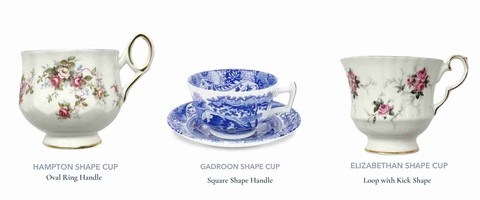 Tea cup handles range in design and include loop handle, French loop, square, angular or 7-shaped handle, ear handle, B loop, loop with kick shape, ring handle and other shaped handles, e.g., the butterfly-shaped handle.
By the 1870s, tea was being enjoyed by everyone in England and Europe and more affordable tea cups and tea sets were made available to the masses. Miniature tea sets were even created for children, who enjoyed copying their parents, pretending to serve tea to their dolls and stuffed toys at afternoon tea parties. Tea cups and the ritual of tea-drinking was firmly established as a traditional British custom.
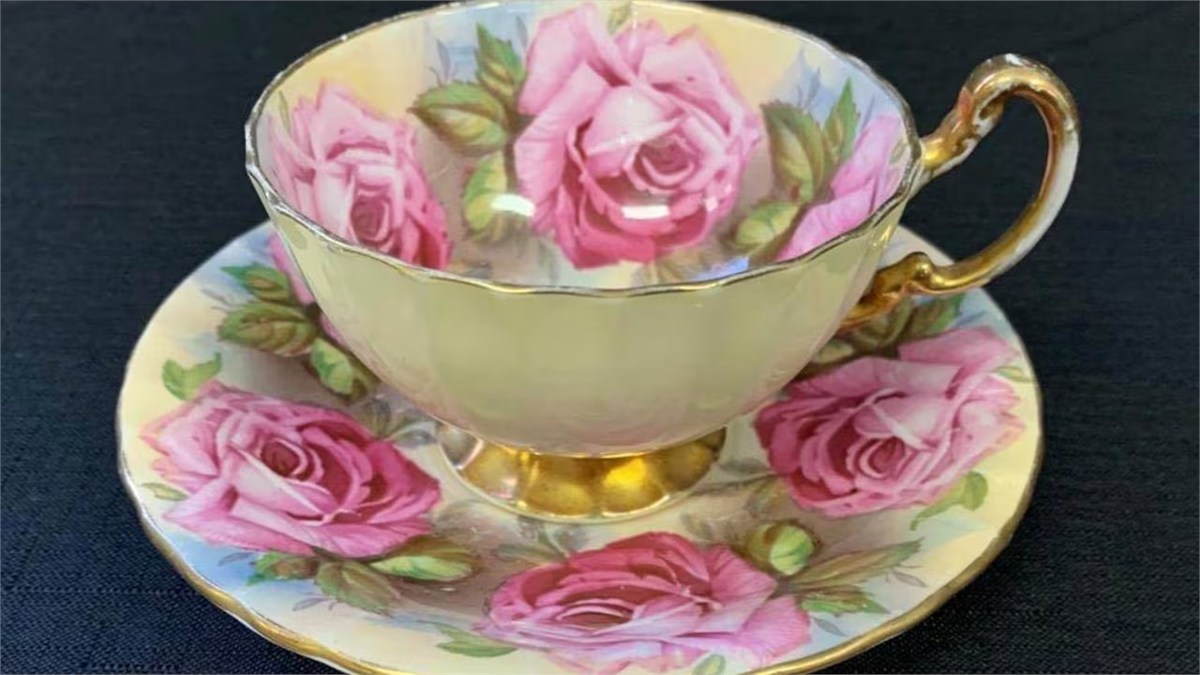 This Aynsley teacup sold for $400 in an online auction held by Key Auctions in Moncton, New Brunswick in 2020.
A List of a Few Noteworthy British Porcelain-Makers
As the interest in tea and serving it in delicate tea cups evolved, so too did many manufacturers and porcelain factories emerge to keep up with consumer demand. It was a boom time for potters and the porcelain industry. Some notable and relevant porcelain designers in England still revered and collected to this day include:
- Aynsley China, (1775–present)
- Coalport porcelain
- Davenport
- Mintons Ltd, (1793–1968, merged with Royal Doulton)
- Royal Doulton, (1815–2009 acquired by Fiskars)
- Royal Worcester, (1751–2008 acquired by Portmeirion Pottery)
- Royal Albert (now owned by Wedgwood)
- Spode, (1767–2008 acquired by Portmeirion Pottery)
- Wedgwood, (factory 1759–present, porcelain 1812–1829, and modern. Acquired by Fiskars)
Tea Cup Shapes and Signature Designs
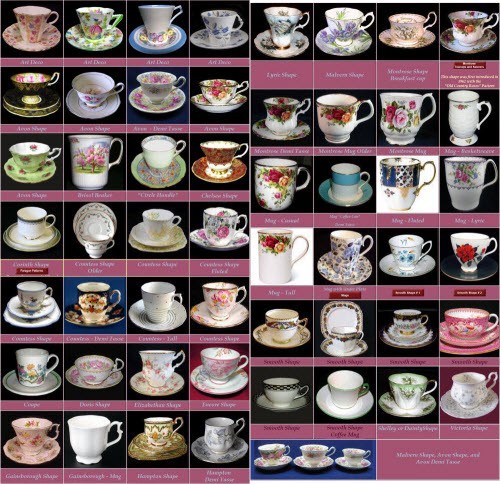
Potters and porcelain designers began to distinguish themselves by creating signature tea cup shapes and elegant patterns based on three common styles:
- Bowl or Classic Tea Cup - a short, wide design, such as the Oban shape by Aynsley.
- Flared or Summer Tea Cup - a round design that flares out at the top much like a flower, such as the Elizabethan or Avon by Royal Albert..
- Flute Tea Cup - a tall, angular design much like a trumpet lily, such as the Lyric.
Some of these shapes can be seen in the Royal Albert collection of vintage tea cups:
Tea Cup Collecting
Considering how valuable tea cups and tea sets were in the past, it is no wonder that they are cherished heirlooms to this day. Single tea cups can be found for sale for as little as $25 to several thousands of dollars. Enthusiasts still collect them to this day as beautifully delicate works of art. Steeped in history, tea cups are a reminder of a time when enjoying a cup of tea with friends meant something to be savoured. Tea cups are a beautiful symbol of elegance and tradition that brings people together.
Sources & editorial notes
Supplied February 2026 editorial. Source document SHA256: cdf8478ae6e82730180bde43c2b5139bb4cde937faaa2fdb4fcad783f39809a4. Eight supplied images, with source references preserved in KnowledgeMedia. Author billing details omitted. YouTube embed retained as a video link. Original publication month supplied as February 2026; day not specified.